Special GuestsThe Special Guests page showcases notable people involved in the music business. Jump to: Wax, Shellac--and Vinyl!--Lives: John Tefteller, World's Rarest Records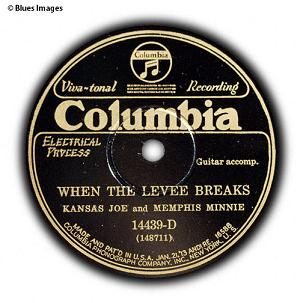 Memphis Minnie, "When the Levee One of the best known record collectors in the world, John Tefteller is a respected authority of all things record related--including 78s, 45s, LPs and memorabilia. He is particularly passionate about early American blues and jazz recordings. His ongoing online auctions list a little bit of everything. If he's coming to your town to look for vintage discs, he is likely to advertise his visit ahead of time--in places like the Farmer's Almanac or through mailings to specific areas likely to harbor rare records. Once he's arrived, Tefteller makes it a point to be available to local residents and anyone who might like to find out the potential value of their records. An eminent scholar of early American music, John Tefteller is among a small group of extremely knowledgeable collectors of rare records. A valuable resource, he is always keen to convey the importance of specific items that he has been looking for and can easily discuss all the important details. Since the 1970's, Tefteller has been buying, selling and promoting what many consider the most important recordings ever made. With all those years in the field, his life's mission has included assembling a "working archive"--some of the most valuable and culturally significant musical recordings in existence. In case you're wondering, he intends to do what he can to see that many of the records that are hard-to-impossible-to-find remain in circulation. In many instances, Tefteller will purchase these rare recordings, (knowing that many corresponding masters no longer exist), restore and/or re-master them, then release them on CD. One such example: a very rare version of "Clarksdale Moan," recorded by Son House. "There are still two records by Willie Brown (with Charley Patton on second guitar) that are missing," Tefteller explains. "There's one that was found some years back: "Future Blues" and "M and O Blues"--a stunning record. In every interview I do, I say: 'Beat those bushes, look in those attics, in those basements, look at those flea markets and find me the two missing Willie Brown's!'" Originally released as 78s (78 rpm records) on the Paramount label; their corresponding catalog numbers are #13099 ("Kicking in My Sleep Blues" backed with "Window Blues"); and, # 13001 ("Grandma Blues" and "Sorry Blues"). "There's a few others," he says, referring to other elusive rare records he is dedicated to discovering. But, "those are the two main ones that are missing that no one's ever heard since 1930." 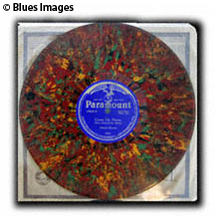 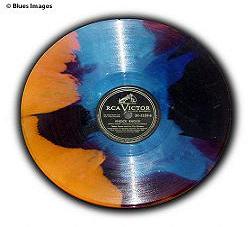 Alberta Hunter, "Come on Home", Paramount 12013. 78s pre-date the vinyl record era, which formally began in 1948, with the introduction of the long playing record (LP). 78s still around might be made of shellac--a compound derived from lac beetle excretions which was often mixed with other materials, like sand and/or cement. 78s are notoriously fragile; and, the majority of those that were sold and enjoyed were not very well maintained. Add to this the monumental difficulty of finding any original masters (master recordings from which copies are produced, many of which were destroyed soon after a record's release) and you've got the makings of one of the world's greatest treasure hunts. Most current consumers of digital music might laughingly dismiss any form of antique disc--especially those made of sand, cement or beetle goo. Not so fast, says Tefteller, defending these early records as superior to other formats. "It's not the fact that 78s were poor technology--they weren't. 78s are very, very good technology." Different types of materials might affect the sound, but the greatest threats to value and listen-ability results from this one central dilemma: about 90% of them are unplayable--i.e. worthless, Tefteller says. This prevents Tefteller and other collectors of rare records from making potentially significant discoveries; and, it disables their options in making them available to anyone else interested in finding out more about these continually relevant pieces of the world's musical culture. "It's that 10% of black blues, black jazz, [and] early oddball country that actually have some real significant value," he explains. Tefteller says he hears this remark a lot: "'Well, 78s are worthless.' Well, yeah, as a rule, they are. But the exceptions are not worthless." The exceptions are what drives collectors like Tefteller and others to scour the countryside in search of the rarities. In addition to approximately 80,000 78s in his working archive, Tefteller has about 200,000 45s--45rpm records. Of all the different kinds of different records Tefteller sells via his online auctions--or through his home-based mail order sales--45s stand out. In a 2009 phone interview, when asked about the market for 45s, Tefteller responded: "stunningly wonderful." 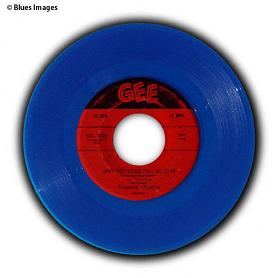 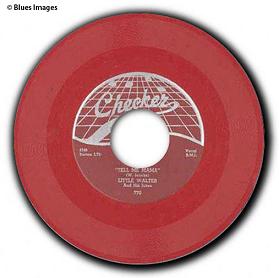 Frankie Lymon and the Teenagers, "Why Do Fools Fall in Love" Gee GC 1012. Collectors all over the world fund a vigorous trade in special or rare editions of the desirable songs (or 'sides' )found on seven-inch singles, many from the early days of rhythm and blues and rock 'n' roll. LPs (long playing records) don't have the same cache for Tefteller--or for many of his customers. "LPs are actually the weakest of the vinyl markets," he says. Sound quality-wise, of these three formats, LPs lag the field and finish third. "The way it works with a 78 is...if you've got a record in near perfect condition, pressed on quality materials and it spins at 78 [rpm], it will sound better than a similar song or the same song pressed at 45...or 33. A 45 is actually better sound than a 33 and a 33 is worst of all. The slower that speed goes, the worse that sound gets." In another comment referring to how these recordings stack up, Tefteller dismisses MP3s--and, specifically, digital compression technology. This current musical direction isn't creating positive benefits for listeners, he says. "We're actually taking gigantic steps backward in sound quality." For collectors and others who feel the same way, the beauty and resonance of the music has more to do with preservation--and being able to keep it in circulation. Tefteller is very interested in ways to present the music and its history in ways that help to reach up-and-coming generations. The larger message is this: our culture needs to have opportunities to experience and appreciate these indelible samples of our nations early music. For the most part, consideration of this type of musical education is non-existent. Even though blues and jazz and many different styles of folk and country originated in America--as a culture--we're also quite well-known for ignoring whole areas of music history. And, even though much of the music that Tefteller collects--or is interested in collecting--was created by African-Americans, there are many within that very same community, he says, who condemn him for wanting to preserve it. "I had a very well known African-American, who's high-up in the Chicago social scene, basically tell me that I'm a racist for liking and collecting blues records...[Many] see it as something they would rather forget, rather than celebrate." Tefteller mentions that he's gotten plenty of resistance from mainstream media outlets like PBS and Barnes and Noble too. He says PBS shut him out of contributing anything to Martin Scorsese's "The Blues" series, which he describes ultimately as "poorly done." As for Barnes and Noble, he says the mega-chain balked at selling his line of music related calendars, because Tefteller's retro-style graphics and packaging were thought to have racial overtones.  A 2007 calendar cover. From While it is true that a small group of the world's most fervent collectors of early blues, jazz (and, to some extent folk and/or country and novelty) recordings remains pre-dominantly white, it is also a sad and telling commentary that these same individuals would be viewed as standing in the way of racial progress. Many who would hold this view may feel that this group of collectors perpetuates negative racial stereotypes and continue the exploitation. But Tefteller doesn't subscribe to that idea at all. More to the point, he wonders: Just because he is white, does the color of his skin imply that he is one of the oppressors and needs to be stopped? "To say the very least, it's unsettling to consider that collectors, historians and--by extension--a whole society is being asked to forget about something unpleasant that happened," Tefteller says. "It's a distraction--something to be thrown across the road of discovery that smacks of politically correct hypocrisy--and self-induced and inflicted cultural amnesia. "We rise above the tide of hatred through other forms of thought and feeling," he continues. "We don't need anyone telling us how to feel or insisting on telling us what to forget. To do this would be to allow something unthinkable to happen in which we all sink backward and remove any degree of racial progress that we have worked so diligently toward. We risk surrendering to the incoming flood of injustice, suspicion and hatred that we have suffered so greatly to overcome." 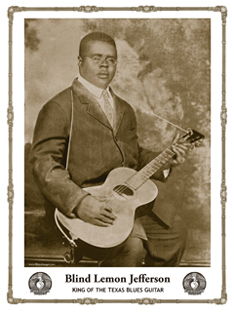 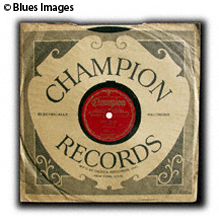 Left: Blind Lemon Jefferson poster, Right: Skip James record sleeve. The task of moving beyond a fairly small group of devoted collectors and reaching a wider audience with the music has been an ongoing challenge. To do this, Tefteller utilizes his aforementioned blues and jazz calendars, which include CDs of early music. The packaging and graphics feature selected illustrations taken from "20's and 30's advertising material." Often, Tefteller notes, he gets a very positive response to the calendars with CDs, because these packages provide both an interesting context--and great songs. Sales of the blues and jazz CDs by themselves--without the calendars--sell about "a thousand or two [copies] a year." By comparison, he says, the calendar/CD combo sells approximately "7 to 10,000 copies." "In the scheme of things, that's a pittance," of the market for the music, Tefteller says--he's reaching a very small number of potentially interested listeners. So the nagging issue of how to bring increased exposure for the physical pieces of music remains an unsolved mystery. Ideally, Tefteller's greater mission requires money. He is always looking for ways to present his rare records--either through educational settings or places like museums. To circulate the music in these or other ways also requires commitment and vision. So far, any interested corporations or sponsors for this challenge remain standoffish. But accomplishing this goal would allow the music in Tefteller's working archive to reach a new audience and continue to have a renewed impact on our world's music culture. To get this to the public on a grand scale, he says, it may take "a big museum in New York City or something--where it's able to be utilized on a better basis." This is unlikely to happen, he says: "Unless we get the really wealthy power brokers of the world to recognize what this is and to put money into making it available." "If you presented it where the public could see it and could listen to it on headphones [or] could buy versions of it in the lobby"-- would be among the ways to go about it, he muses. But, so far, nobody has come along who wants to spend the money to make that happen. So, "I'm doing what I can to keep it moving forward, rather than backwards into obscurity." For now, he says, he's "talked to a number of different people" interested in accessing and/or utilizing the archive in different ways. "I'll help them whenever I can. If they need reproductions of material for whatever their project is--as long as they cover my expenses to deal with it--I'm good with that. But they have to be willing to at least display it and make it available and do something with it somewhere rather than just lock it away in a building." 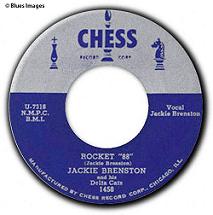  Jackie Brenston, "Rocket 88", Chess 1458. Tefteller's working archive contains some of the most historically significant recordings ever made. In lieu of finding potential investors interested in funding some type of proper presentation, Tefteller's record collection remains a privately held--but culturally invaluable--investment. The influence of many of these precious investments extends beyond all musical and cultural boundaries. The music permeates every strand of our world's cultural fabric. Unlike much of what passes for important music today, these treasures are timeless. Asked if his own children are going to carry on his work, Tefteller responds: "So far, no. Translating this to a younger generation--it works with some people and it doesn't work with others. My son likes music a lot. In fact, he's playing the piano upstairs right now. But he's not interested in messing around with eighty year old blues records." Contact information for John Tefteller: Vinyl Lives Visits with Miami Radio Legend Rick Shaw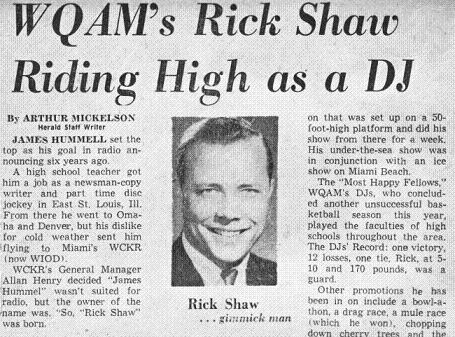 One of many times DJ Rick Shaw received favorable notices. Ever since he was a kid, legendary South Florida radio veteran Rick Shaw has been into model trains. He loves trains. His house has an entire room just for them. Shaw's train room--a 26 by 22 foot space--is fully outfitted with a complete layout of 1/24 scale, 'G' size trains with every detail--including mountainous terrain and street scenes. "It's like havin' Disney World in your house!" Rick exclaims. From 1960 up until his retirement from WMXJ, Miami, in November 2006, Rick was one of the most popular personalities on South Florida radio. Born in St. Louis, Missouri in 1938, his generations of fans--many of whom grew up listening to him on the radio, or watching him on television--will forever remember his instantly recognizable voice and trademark Greek fisherman's cap. For much of the Miami-area population, Rick Shaw is and will always be an integral part of their lives here. To his fellow colleagues in radio, Shaw is the consummate professional, that rare type of individual whom everyone likes, who knows the right thing to say or do at just the right moment, who sets a high standard for how things are done. With 46 years of continuous broadcasting in one market--and no gaps--he is also that rare entity in modern life: a singular talent who pursues and achieves excellence by devoting their entire career to a life in the field of mass communications. Once earning a 54 share of the Miami radio market is among his proudest accomplishments. That means that within a one month time period, more Miami listeners were listening to Rick Shaw than to anyone else--at any of the other radio stations combined. 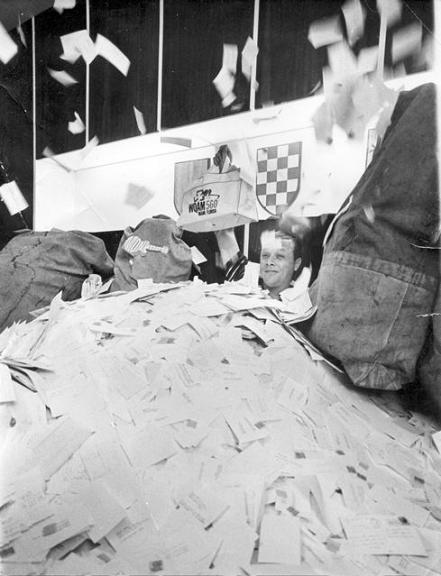 Deep in fan mail, DJ Rick Shaw enjoys the moment. Upon his arrival in Miami via KICN in Denver, Shaw (born James Hummel) was given his on-air moniker by WCKR station manager Allan Henry. Later, Rick would move to WQAM, WINZ, WAXY and then WMXJ. "When I came here in 1960, I said, 'This is paradise. Whatever I'm gonna do, I'm gonna do it here.' I just loved South Florida. Not realizing along the way that I was accumulating all these relationships, building these little bridges between me and the listeners. And now I go to these high school reunions and it's bizarre. I mean, the stories I hear." Many of those faithful South Florida listeners also remember Rick's nightly sign-off song, Ray Peterson's "Goodnight, My Love." To Rick, that song says it all. "If I had to pick one song, that would be it. I played it so many times and heard so many stories from the people who were listening to that song back then and I realized what an incredible impact it had. A lotta kids had the rule that if they weren't home by the time "Goodnight, My Love" was over--that was it!" Shaw has met or befriended countless record industry people, among them Atlantic Records chief Ahmet Ertegun and his brother Nesuhi; and Motown recording artists like Diana Ross and The Supremes and Marvin Gaye. Shaw knew a lot of local, Miami-based people too: his friend, Channel 7 on-air host Charlie Baxter (aka "M.T. Graves") was "Great," Shaw says. "He was a very talented radio/TV guy--a broadcaster. He knew how it worked, he knew what to do and he had it down. He was a very good friend." Baxter's popular Saturday afternoon television show "The Dungeon" was a South Florida audience favorite. World renowned recording studio engineer Tom Dowd was another good friend. Dowd was the man in the Atlantic Records control room overseeing the details of some of the most famous songs of all time. "I knew him very well," Shaw says. "He did "Respect" with Aretha Franklin and some real heavy-duty stuff, some classic rock 'n' roll." One popular singer who made a big impression was Gene Pitney. "He wasn't the biggest star in the history of rock 'n' roll by a long shot, but he had a bunch of hits. He was appearing at the Eden Roc [hotel, on Miami Beach] and he came over and did the TV show ["Saturday Hop" on Channel 10]. We had dinner together and then went to the Playboy Club. He played the piano and sang a bunch of songs. It was really neat." Another of Rick's favorite memories is when he first played the Beatles' first hit record, "I Want to Hold Your Hand" on the air. That monaural (or 'mono') 45rpm disc, framed, is proudly displayed on the wall in Shaw's train room. "Capitol Records released it on a Saturday afternoon at noon," Rick recalls. "So, everybody--all over the country--had it at exactly the same time. There was such a big pre-release uproar about this British group, that everybody wanted to be the first one to get the record. So as soon as it came in Special Delivery on that Saturday, we put it right on the air." 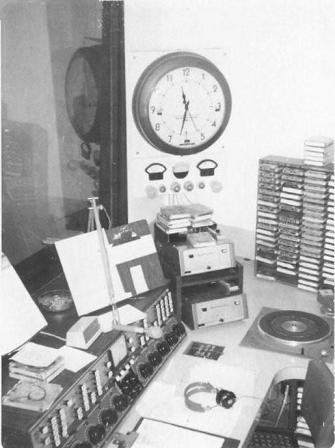 A typical example of a 1960s era control room. Rick still has some vinyl records--various 45s and a few hundred LPs--notable and meaningful mementoes from his Disc Jockey days."I still have a Beatle collection from Capitol, the entire Beatle library, still wrapped, never been out of the box," he says. Numbering sixteen or seventeen pieces, Shaw mentions that these Capitol items were originally given to the radio station as prizes to be given away on the air. "The Beatles were so hot. Capitol, of course took advantage of that, using that as leverage to get us to play their other records!" In the heyday of radio promotion, record labels worked feverishly to develop a visible--and usually mutually beneficial--relationship with radio stations, particularly those in sizable metropolitan areas like Miami. In the process, many promotional, or "promo", copies of records flooded radio stations. Management and disc jockeys couldn't help but struggle to keep up with the listening preferences of their audience--while anticipating the next direction the music was going to take. 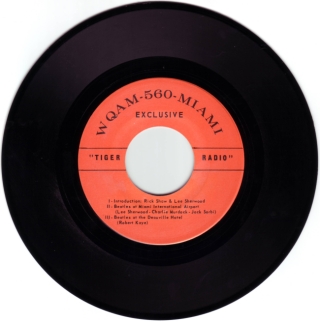 Another radio station "promo", this one For people who collect records, there's an abiding interest in "promo" copies. However, for many collectors, the thrill of the chase pertains to rare versions of songs or albums, not necessarily those widely available versions that were million sellers. Following the story of how these promotional items found their way to interested collectors yields other insights into the mostly bygone era of radio promotion for records. In Shaw's experience, a lot of the promotional items that came into the station went unheard. The radio stations he worked in focused primarily on the hits. So, that's mostly what got played. The responsibility for deciding what songs got played didn't fall on him. Instead, that job belonged to either the Program Director and/or Music Director. For example, every Tuesday at WQAM, Shaw recalls, Program Director Jim Dunlap had Promotion Day. Listener surveys were a big part of that, Shaw says, not the thoughts or potential votes of the DJs. WQAM depended heavily on their listeners to fill out questionnaires, many of which were filled out by shoppers at Thom McCann, a South Florida-based shoe store chain. "Because if he was going to change the play list in any way, that had to be reflected in those listener surveys that we printed up and gave out through the stores." 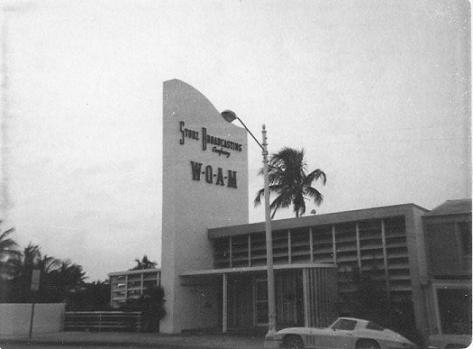 Radio Station WQAM, Miami, 1960s. The scene at the radio station was usually a hectic one. "The lobby would be full of promo people, with whatever they had to offer that week. And they would get their audience with Dunlap. They would listen to a few seconds of each record--depending on how much time he had, and that's how he picked out what he was going to play on the air." Listener polls were easier to evaluate than having to accommodate all the personal opinions of the DJs. "That's too cumbersome, and it takes too long. It's much better to have one guy," Shaw continues. In part, this strategy was was also handy for deflecting attention away from on-air staff and record company promotions people, who were under intense governmental scrutiny in the wake of the Payola (or "Pay for Play") scandals that rocked the music industry in the late 1950s and into the early 1960s. For many of those years of rock 'n' roll and pop music history, 45 rpm records were a popular format. Following the rise in popularity for the record album (LP), 45s continued to retain their promotional importance, along with what many regard as their superior sound. With their A sides and B sides, picking the 45s that were destined to be hits remained an ongoing mystery on Promotion Day. Record company representatives "always came in with the 'A side and the B side'," Shaw continues. "The record company would pick the side that they wanted. As a matter of fact, in many cases, I think they went out of their way to put junk on the B side so it wouldn't get played! But they would come in a and say, 'This is the one that we think is gonna really be a hit.'" In so many instances, Shaw says, for anybody to be able to determine ahead of time what was going to be the next wildly popular song was a "crap shoot"--next to impossible. "It's like a baseball game. If you go through a year and you wind up hittin' 350, you've had a helluva year. That's pretty much the same ratio that you can apply to being able to pick a hit record." 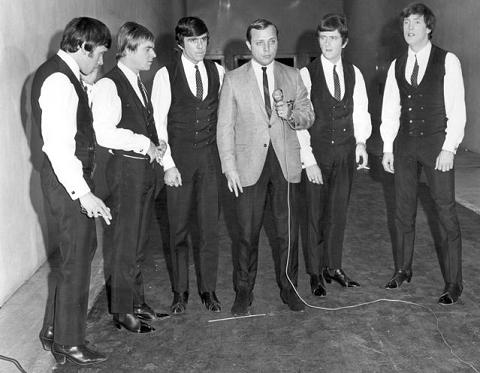 Rick Shaw and the Dave Clark Five. The arrival of the British Invasion in the early 1960s brought an influx of desirable promotional items often sought after by today's record collectors."We would occasionally get some of the British stuff, because it would be issued there first--maybe a week or two ahead of us--so we would have somebody over there package it up and express it to us, so we would have it before anybody else had it." Competition for listeners between rival radio stations was usually good natured--and, simultaneously--fierce. At WQAM, the ongoing rivalry was with WFUN. With more signal strength, WQAM usually won out. "But there was constantly a battle going on," Shaw laughs, reciting the typical customary scenarios. "We had a DC8, they had a Constellation. They gave away a Mustang. Well, it was a six. We gave away two Mustangs and they were V-8's. It was always one-upmanship." 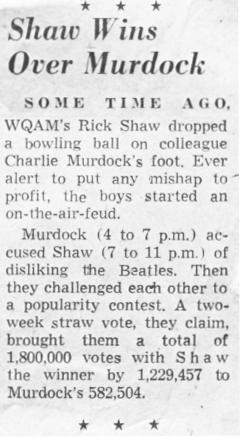 Newspaper coverage of another Like many aspects of contemporary living, much of what was once known as the radio business has changed. Though there's still some great on-air talent around, the rules that applied yesterday are not the same rules that apply today. These days, automation and standardization dominate. Records--those circular plastic discs so fondly remembered by previous generations who grew up with them--have mostly disappeared from radio stations everywhere. Now, the music's all stored in computers and song lists are displayed on a screen. In many markets, programs are mostly pre-recorded. While Shaw has presided over an era treasured and revered for great songs whose enduring impact and meaning are still celebrated, he is not dismissive of the changes brought about by the digital revolution. Acknowledging that the 1960s get his vote for the Golden Age of Radio, he supports the idea of progress--and the benefits of the technological progression that we all currently enjoy. "There are changes--always. As the technology develops, the beat goes on. Sooner or later, it's gonna get better. Sometimes it takes longer and sometimes it doesn't. But, ultimately, we wind up with a better product. If you go back to the beginnings of records, you actually had a piece of steel in the groove of that recording that created what you heard. That's pretty archaic by today's standards. Today, you've got lasers--nothing touches--and you can do all kinds of things that you couldn't do before. So, I would have to say, progress is better. But, having been through the early years, I gotta say, it was a helluva lotta fun."  A promotional Beatles magazine distributed through WQAM. Prior to his retirement while at WMXJ in 2006, Shaw wanted to spin his copy of "I Want to Hold Your Hand" and hear it on the air one more time. So, one day, he took it to work with him. "They still have one turntable and one tape recorder. Everything else is digital now. I took that 45 in and played it--and it was something." Veteran DJ and longtime Miami radio legend Rick Shaw died in 2017. 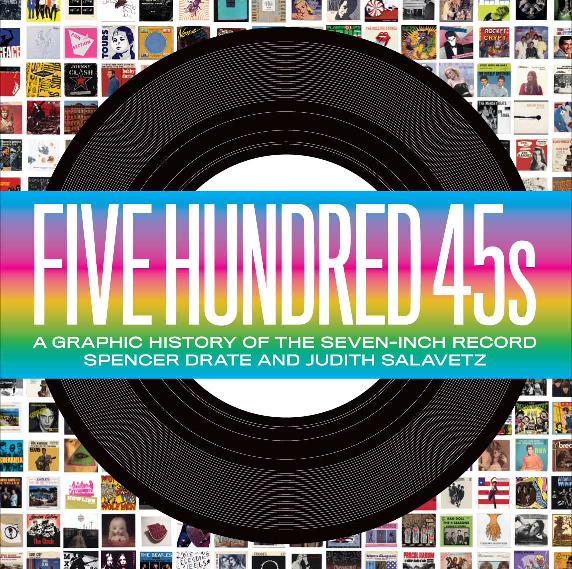 Cover photo courtesy of Harper Collins Publishers. Vinyl Lives Reviews: Five Hundred 45s: A Graphic History of the Seven-Inch Single45rpm records--also known as seven-inch singles--are portable; and, they are loved for their great sound. In fact, some would say that 45s have far better sound than any other format. Some might even say that 45s possess a certain cultural cache--they're hip again. And, oh yeah, some of them have some awesome sleeve art. In their new book, Five Hundred 45s: A Graphic History of the Seven-Inch Single (Collins Design), co-authors Spencer Drate and Judith Salavetz celebrate awesome 45 sleeve art with a vengeance. This is the long awaited follow-up to 45 RPM: A Visual History of the Seven-Inch Record (Princeton University Press, 2002), written with Charles Granata. 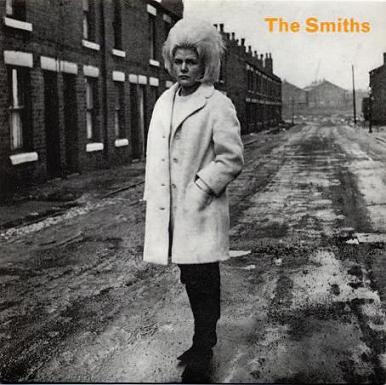 The Smiths. Heaven Knows I'm Miserable Now For this much expanded, affectionate and more comprehensive tribute, Maestro Lenny Kaye kicks things off in the book's Intro: "Appreciated on its own terms, a single--like our individual lifespan--is a world unto itself." That observation pinpoints the process involved for our mind's interpretation of the artwork, a unique window into each (A and B side) song. Stated another way, Kaye explains, "The illustration...creates the mood." Clearly, the books co-authors and contributors have a passion for what they do. Their life spans and professions envelop the great arch of the 45rpm singles' history and offer heartfelt testimonial to the importance of the 45rpm era (1949 to present), with deep appreciation for the format's heyday, the 1950s, 60s and 70s. Throughout most of the book, each individual cover appears on its own page. For referencing purposes, the books Discography (or,Index) in back contains much of the available artist/label/date information.  Spencer Drate and Judith Salavetz. Photo courtesy of Harper Collins Publishers. Both Drate and Salavetz are creative directors and renowned graphic designers. Some of their best known graphics appear on album covers and record sleeves for the likes of Talking Heads, U2, Joan Jett, the Ramones and Velvet Underground. For their new book, Drate and Salavetz were assisted by Brendan Dalton; the discography researcher was Justin Kavoussi. A few short, insightful essays within the collection of covers--by Stuart Goldman, Tom Hazelmyer, Eric Davidson and Bruce Licher--add to the fun. 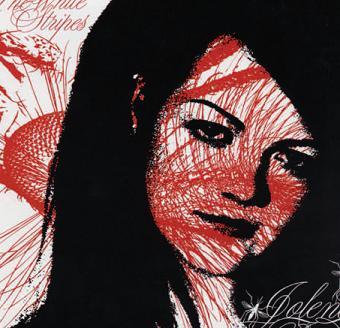 The White Stripes. Jolene, Third Man, 2004. This graphics laden, coffee table-styled book is overflowing with arresting visual images. Produced with an eye toward appealing to casual observers, die-hard record collectors and anyone interested in art, Five Hundred 45s telegraphs the impact of the music inside the package. Just like the songs, seven-inch sleeves are full of power packed ideas. Dull or daft, full of fun or fury, focused or irreverent, these canvases provide pieces of a puzzle--partial roadmaps to other worlds. Hard to believe now, but for many years, 7-inch sleeve art was one of the few ways for music fans to actually see pictures of their favorite bands. Arresting, captivating and by turns inspiring, Five Hundred 45s contains something for record history buffs, vinyl collectors and just the plain curious. The righteous soundtrack is in our minds. ************************* Q and A with Spencer Drate and Judith Salavetz. Q: Some record collectors are quite emphatic that 45s have superior sound to LPs and other formats. Any comments? A: Yes, we too agree. Go out and purchase a record player if you don't already own one. Then go and purchase your favorite CD tune and compare it to the same song on a 45. Play it on the record player (it could even be an old children's Fisher Price turntable!) and you will immediately hear the difference. The 45 does away with the distortion zone found in ordinary records. Words cannot explain it. To appreciate and experience the advanced sound quality, the 45 must be played and listened to. 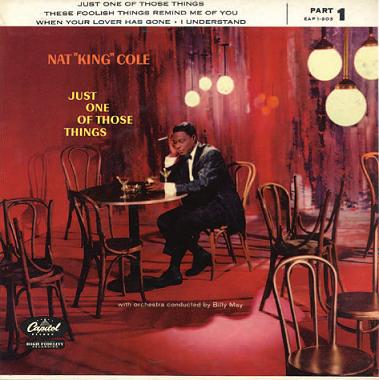 Nat "King" Cole. Just One of Those Things. Q: Perhaps there are several Golden Eras of music (early rock, lounge?, punk etc.) that enjoy continued popularity. What era(s) of cover design art do you feel most attracted to personally? A: (Spencer) I prefer the 1950s [and the] 1970s when I designed for the Ramones, Pretenders, Talking Heads and Jamie Reid [designed] for the Sex Pistols. I also like the 1990-2010 era with rock poster artists crossing over to 45-sleeve art like Frank Kozik, Jeff Kleinsmith, Art Chantry, Hank Trotter, etc.... A: (Judith): For me, the 45-cover art that I prefer is the 50s, when we had covers of those pretty boy singers, such as Sal Mineo, Elvis; and, of course, those hairdo close-ups of Brenda Lee and Connie Francis. I also like the 60s for the group shots: the Yardbirds, Pretenders, Beatles, Stones, Buckinghams, Love, the Mannish Boys. We get to see how cute some of them were and how dramatic others looked! Also, from the 90s on, [there was an] amazing freedom of creativity--White Stripes, REM, Joseph Arthur, Rocket From The Crypt, The Electric Eels, Devo, The Adverts, so, so many more. You will just have to buy the book to see these amazing sleeves! Q: During the heyday of the 45rpm format, approximately how many seven inch discs were produced? A: Interesting little note: From the mid-1950s, through the 60s and 70s, the 45 was in its heyday. In 1955, RCA Victor acquired young Elvis Presley from tiny Sun Records. And so began the invention of the teenager! It was the teenager that made the 45 a best seller! In 1956, Capitol Records opened its new LA corporate headquarters, (conceived by an architectural graduate student named Lou Naidorf) to resemble a stack of 45 records on a turntable. 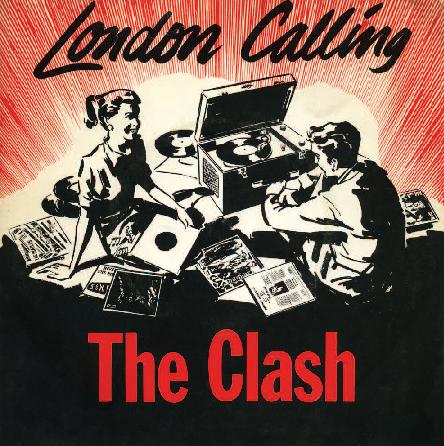 The Clash. London Calling. CBS, 1979. In the peak (U.S.) sales years, from 1973 to 1976, more than 100 million 45s were sold each year. Seven-inch sales peaked in the U.K. in 1979, when an amazing 89 million of them were sold. In the 1980s, when the CD [format] hit the market, vinyl of all kinds began their descent! The 45 ALMOST died 6, 7 years ago, but, miraculously--because of the younger generations' interest (and the 45s' superior sound quality)--there has been a rebound, as reflected in sales--both in U.K. and U.S. Currently, more then a million 45s are being pressed every year. The numbers will increase as the 45s' popularity grows! Q: There are quite a few small record labels and independent artists around putting out 45s. Any thoughts about the current scene for 45s--and where things might be headed? 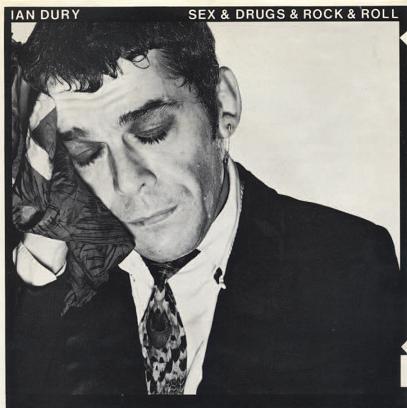 Ian Dury. Sex, Drugs and Rock and Roll. Stiff, 1976. A: The popularity of bands such as Oasis, White Stripes, Halo of Flies and Vampire Weekend are reviving sales of the seven-inch. Record companies are beginning to sell re-issued 45s on newly created websites that offer vinyl. There is renewed interest and sales. Turntables are, once again, selling and indie and mainstream musicians are producing 45s for their superior warm sounds and their physical art presence. The 45 Lives! Q: Discuss some of the early cover/sleeve designers best known for their contributions to the sleeve/cover art form. A: In the 1950s: Alex Steinweiss, John Brandt, Phil Stern, Andy Warhol, Burt Goldblatt --beautiful cover work from traditionally famous artists. From the 1970s: Barney Bubbles' work for Ian Dury; Spencer Drate's for the Ramones, Talking Heads and The Pretenders; Spencer and Judith's covers for Bon Jovi and Joan Jett; Jamie Reid's for the Sex Pistols' 45 sleeve series; and, John Morton, for his work with The Electric Eels. And, in the 1990s: Jeff Kleinsmith's many Sub Pop record sleeves (profiled in the Five Hundred 45s book); as well as the work of Frank Kozik, Chris Bagge, Art Chantry, Hank Trotter, Coop...There are so many great ones, and they are still coming! 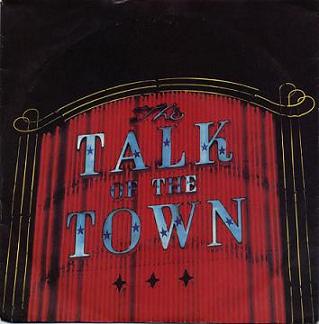 The Pretenders. Talk of the Town. Real, 1980. Q. Of the designers represented in Five Hundred 45s, are there quite a few that (by necessity and/or desire etc.) also work in other fields (advertising...promotion)? Is it generally somewhat natural for these artists to also do album covers, posters etc.? A: Examples of some of these well known rock poster artists were profiled in Drate and Salavetz's "SWAG" Books. They include, from the 1990s-Jeff Kleinsmith, Art Chantry, Hank Trotter, Coop, Frank Kozik. The attraction being the freedom to do their art/design for the indie record labels and musicians--without compromise! Q: Both of you have collaborated on other books. In Five Hundred 45s, you have assembled what may be the last word on 45 sleeve design. Are you satisfied with representing these five hundred...or, do you yet harbor a desire for a follow-up?! A: We love this book, but there was room for just [these] five hundred. So the next five hundred we love just as much will have to be in Volume 2.There were so many wonderful sleeves that we had to leave out! Can you imagine? This is the first time a visual history of the 45 cover art sleeve was presented in this manner. Yes, of course. There must be a follow-up 45 book series! One Dime Blues: A Look Inside Music Maker Relief FoundationThe Great American South gets some attention every now and then, like when a hurricane rolls through, or when a series of tornados strikes. Historically, it is a region of our country where the people are overlooked and misunderstood. Understanding takes time, something always in short supply. An increased understanding and awareness of history depends on our grasp of other subjects, including geography. Mention New Orleans, Memphis or Nashville and most people will easily come up with familiar facts and information. But what about places that are hard to find on a map? Among other things, New Orleans, Memphis and Nashville are world famous for their music. Yet, beyond the boundaries of these familiar areas, rural Southern life endures --the roots of the music can be seen and heard. Those willing to journey off the beaten path might still discover the South's musical abundance and come to better understand how the region's history informs much of what we hear today. Such is the case with The Music Maker Relief Foundation, a small non-profit devoted to musicians rooted in the Southern tradition. It is an organization with roots that extend deeply into this region's soil. Based in Hillsborough, North Carolina, Music Maker came into being as a way to bring renewed interest and appreciation to Southern blues and folk musicians. Many of its artists once had viable careers. Struggling to make ends meet, these talented musicians found that the music slowly became less of a priority. The demands of putting food on the table, getting medicine, fuel--any of life's necessities--eventually left the music to gather dust. In 1994, the husband and wife team of Tim and Denise Duffy started Music Maker. They continue to chronicle, promote and preserve this region's music. The Duffys' work follows the paths of early folklorists and chroniclers of Southern music, like John and Alan Lomax, two generations of early and mid-twentieth century folk and blues music pioneers. The Lomaxes traveled extensively throughout the Southern and Western states, recording and documenting the regions music. 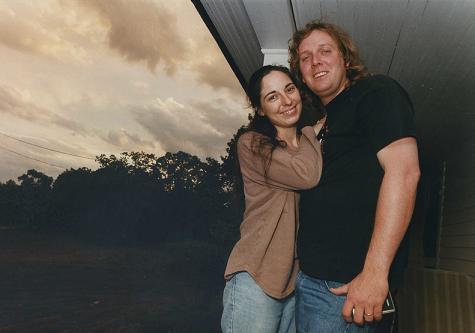 Denise and Tim Duffy © Duffy. Courtesy of Music Maker Relief Foundation. The Duffys' work doesn't just end when the songs are recorded. They're in for the long haul --providing career support to their musicians, getting them food, medicine and fuel, reviving their lives and making their music seen and heard again. Born in 1963, Tim began his own field recordings of neglected and virtually forgotten musicians beginning in the late 1980s. His first recorded compilation, A Living Past-- parts of which were first assembled in 1993--became a catalyst enabling the foundation to become formally organized and funded. In 1989, Tim completed his Masters in Folklore at the University of North Carolina. But his immersion into the worlds inhabited by forgotten and neglected musicians began in 1981, when he first moved to North Carolina. Many artists once enjoyed a measure of popularity and success. Living in extreme poverty, their lives a constant struggle to stay alive, daily survival replaced music. One of the first musicians Tim worked with was James "Guitar Slim" Stephens. In the book Music Makers: Portraits and Songs From the Roots of America, Tim recalls: "Slim was an old blues rounder. He had been everywhere in the U.S. and soon introduced me to a host of blues artists in Greensboro, North Carolina. I drove him to play at house parties and he patiently taught me the subtleties of his guitar style. We spent a great deal of time together at his home and around the city." 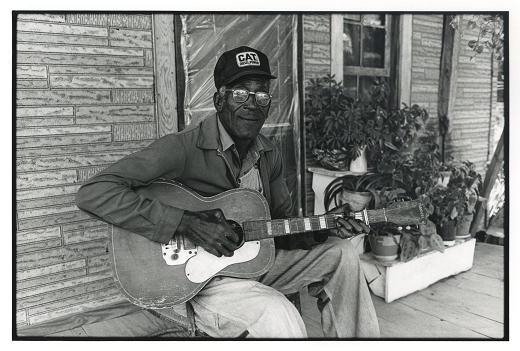 James "Guitar Slim" Stephens © Duffy. Courtesy of Music Maker Relief Foundation. Within a year, Stephens was overtaken with cancer. Before he died, he instructed Tim to look up "Guitar Gabriel" (Robert Jones, 1925-1996), a good friend who would likely be interested in helping Tim further his work. Following his graduation from UNC, Tim was looking for work as a substitute teacher. "I awoke one morning with a premonition that I was going to meet Gabe." Soon, a temporary teaching job opened in east Winston, an area of Winston-Salem where Gabriel was rumored to be living. "I asked a few people...but no one would take a white guy to east Winston." So, once he had the opportunity, Tim asked his class if anybody knew where Gabe might be. "One told me he had been burnt up in a house fire, and another confirmed that he was dead, then a small girl came up and told me that Gabe was her neighbor and very much alive. She gave me directions to a drink house." As Tim explains: "There are no establishments for working class African-Americans to go downtown and socialize in a city like Winston-Salem. Drink houses are neighborhood places where one can buy a beer and people can get together. The proprietors loan patrons money when their checks run out or give them credit." After school that afternoon, Tim went to the drink house, where he explained who had sent him and who he was trying to find. The proprietor sent him to a nearby housing project. Tim met Gabriel as he was returning home. "Where you been so long?" Gabe said. "I know where you want to go. I've been there before and I can take you there. I'm an old man and my time is not long. When I die I want you to promise to bury me with my guitar." 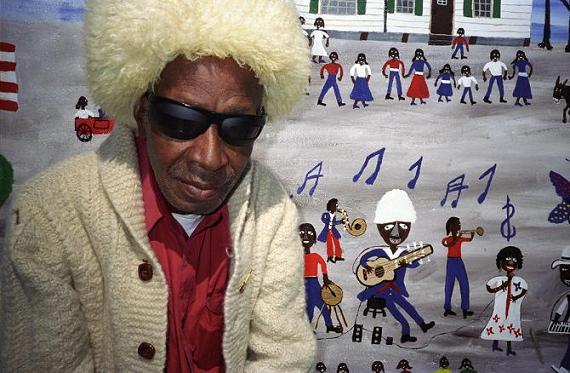 Guitar Gabriel © Duffy. Courtesy of Music Maker Relief Foundation. Duffy's time with Gabriel further defined the framework for Music Maker, initially designed to assist Southern musical artists struggling to make ends meet. From its earliest beginnings, its mission has been "giving back", finding a way to help--and to right past wrongs. Stories of "helpful" people taking advantage of those less fortunate are as common as kudzu. Indeed, Tim's early agreement with Guitar Gabriel sums up this common tension. "We had a simple management contract: If I ever cheated Gabe, he could shoot me." Surprisingly, both Tim and Denise were born and raised in Connecticut. Responding to writer Kenneth Johnson in a 1999 article for the Charlotte Observer, Tim said: "I think sometimes it takes an outsider to come into someone's community and point out things of value." In a recent telephone interview, Tim explained how he found Denise. "We actually met when we were in high school and then we met again at my 23rd birthday party in New Haven." The couple married in 1993. Lucas and Lilla, their two children, have grown up within an inspired and unique household. In 1986, Tim's father, an attorney, passed away. Many of his dad's friends suggested that Tim keep in touch and to let them know if they could be of help to him. One of those friends was Mark Levinson, "one of the great pioneers of home audio," Tim says. In late 1993, it was Levinson who advised Tim, "who came up with the name Music Maker Relief Foundation and showed me how to fundraise." He also helped Tim put together his early musical sampler, A Living Past. Levinson used one of the first versions of that compilation to demonstrate audio systems in his showroom, generating interest and contributions to Music Maker early on. In January '94, Music Maker was formally launched. In October of 1995--by chance--Levinson met guitar legend Eric Clapton at a small New York cafe. Levinson explained the idea behind Music Maker and some of the artists that Tim had discovered. Clapton was enthusiastic and within a few weeks, visited Levinson's showroom to hear some of Tim's field recordings. 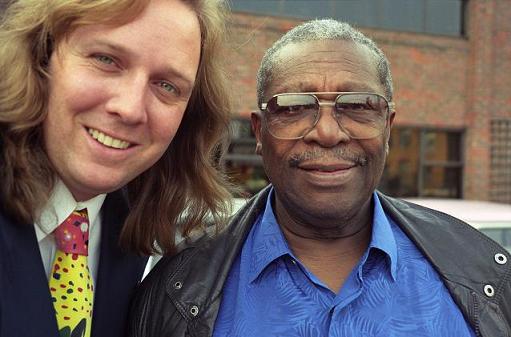 Tim Duffy with B.B. King. © Duffy. Courtesy of Music Maker Relief Foundation. Today, the foundation is a well respected and actively participated in concern, one involving gracious and generous music legends including Eric Clapton, B. B. King, Bonnie Raitt, Taj Mahal and Levon Helm. That's just for starters. But the true lifeblood of the foundation has always been its individual contributors. "It's the $20 to $500 donations that keep us goin'," Tim says. "Early on," Denise explains, "the foundation was much smaller. There was a big dividing line in 2000. We started the foundation in '94 because Tim was working with these artists, playing gigs in bars, trying to find record deals--doing whatever he could to help the artists and himself to survive. When we started the foundation, the commercial work was not substantive enough and people needed shoes, food, medicine --right now. And so, we had a two-prong approach: continue to get commercial work for the artists; and start doing some fundraising, to pay for these necessary things while we're lookin' for work." From 1994 to 2000, a five-room farmhouse in the farming community of Pinnacle served as their base of operations. Writing for the Associated Press, Estes Thompson described Music Maker aptly: "The atmosphere...is like a hip welfare agency, fundraising campaign, and jam session wrapped together." Tim accepts the "hip welfare agency" rendering today, though many different roads have led them to where they are. "We're still very much like that. Guys still comin' by. No bureaucratic bullshit. It's very casual and businesslike. We don't kill these guys when they're lookin' for money." In 2000, corporate sponsorships and a recording contract ended. This brought about a change in the way that the Duffys viewed the foundation: They no longer wished to be beholden to someone else's marketing whims. "We're a stand alone non-profit now," Tim explained, "We're working harder than ever." Their move to Hillsborough in 2001 brought Music Maker within a short drive of Raleigh-Durham and the University of North Carolina campus in Chapel Hill. "The farmhouse in Pinnacle [was] kind of a romanticized idea: we were starting this very grassroots organization," Denise says, "We rented it for $300 a month. We loved it. It was a farming community and it wasn't too far from any of the artists we worked with in Winston-Salem. But--over time--we did find it isolating, because it was very rural." Plus, they needed office space that was out of the house. Following their move to Hillsborough, a city of 5,000, they began the process of looking for an office building to buy. Denise, the mom and "business person," explains: "This past year, we ended up buying something that our foundation could afford. I think one of the reasons we're here fifteen years later--doing what we do--is that we've always been very conservative fiscally, and have always kept really low overhead so that we could expand and contract as the economy allowed." In June of 2008, the foundation moved into their new building. Denise, explaining her business background, says: "In my past life, I had corporate jobs in the apparel industry--when there was one of those in the South--quite a vibrant one. In '94, I was a little burnt out. I said [to Tim] 'I think I could help you figure out this 501(c)(3). You have to deal with the whole business side of this.' I always had an interest in small business." Denise says she learned a lot from her father, a real estate appraiser. "Right from the start, I started working with the accountants and lawyers" filing the forms, and "putting together deals and plans. I just found that very interesting." With a nine mile drive from their home to work, the offices of their supportive cultural enterprise are "in a pretty humble office building on the northern edge of the Hillsborough historic district," she says. "It also borders a traditionally African-American neighborhood. So that's a very comfortable place for us to be. It suits our work." Chapel Hill is where Tim completed his Masters. Within the Wilson Library there, Tim's extensive collection of field recordings and related materials has been archived in the Southern Folklife Collection, something that Tim is "real proud" about. "We go from time to time and speak," says Denise, "We do some events there. We have a lot of contact with the students. We really enjoy those kids--there's a lot of vitality." Some of Music Maker's interns attend UNC. With two other full-time staff besides themselves, their organization may be small but their impact and outreach is extensive. With a core group of about forty "recipient" artists --those who get direct monetary assistance in the form of grants--the thrust of their work is devoted to older musicians (65+) whose annual incomes are less than $18,000. Denise admits that number was "pretty arbitrary"--agreed on while the many details governing operations were being established in meetings with their lawyers and accountants. "I have not had to raise that. The sad truth is most of [our eligible artists] are living on less than $10,000 a year." Getting performance dates and distribution for an artists recordings is an ongoing primary goal. "We'll take this commercially unviable music like a Boo Hanks or Dr. Burt and we really work hard makin' the best record that they can possibly make [and creating] a professional package--so people take these guys seriously." "Tim is a great talent," Denise says. "He's really great with the artists, he really understands the music and recording. He's very program and art oriented." 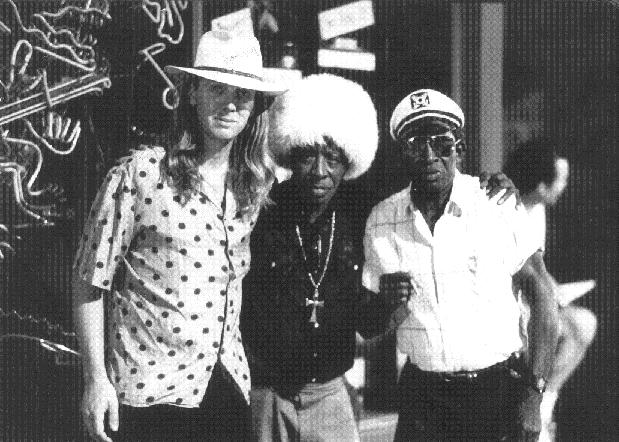 Tim Duffy, Guitar Gabriel and Captain Luke © Duffy. Courtesy of Music Maker Relief Foundation. As the foundation's longtime producer, he has had many different distribution relationships with a variety of record labels. In the past, Mark Levinson helped get Music Maker CDs into Tower Records in New York. The ongoing challenge of getting distribution has always been tough. Recently, Tim got Music Maker artists into many Barnes and Noble music departments, albeit by giving CDs away. "We distribute our own stuff," he says, admitting that "it's been kinda hell the last couple of years. Our biggest current success is in France--Dixie Frog Records. I've produced a bunch of records for them." Of the two Music Maker co-founders, Tim is the one who's a bit more in the public eye--the recognizable face of Music Maker. He's also an accomplished musician, a guitarist possessed with a good ear and keen desire to capture the sonic essences that contribute to great musical art. As a producer, he is that rare breed--someone who cares and understands the artists and helps them enjoy a renewed sense of their own worth. Discovery, economic assistance, performances, recordings and increased recognition for the contributions of their artists--these are among Tim's many passions, and remain the primary ingredients of the Music Maker recipe. They aren't the only organization devoted to helping struggling musicians, but they are special. Music Maker doesn't forget about the folks that they are dedicated to helping. "There's so many good organizations out there," Tim says, acknowledging the good work of many different charitable groups. "I think what's different with us is, when we deal with artists, we have an ongoing relationship--most of the time--until they pass. They get the respect that they deserve of knowing what sold, what's going on and having access to their work. I think that's a different model. Instead of just giving them a national Folk Heritage Award and giving them a check, which is great. But usually, that ends and then there's no help on the back end of gettin' the artists gigs or work." At Music Maker, he says, "It's an ongoing family atmosphere." Past concert tours have included the Winston Blues Revival Tour, which brought their artists to appreciative, capacity crowds in San Francisco, Los Angeles, New Orleans and Austin. Their Congressional Blues Tour, which began in 2004, rolls into Washington, D.C. every spring. European touring dates, usually in the summer, are a Music Maker favorite, with past stops in Spain, France, Germany, Switzerland and Austria. Also, the annual Taj Mahal Fishin' Blues Tournament, takes place in Costa Rica. Blues and roots music legend Taj Mahal, another invaluable supporter and organizer, serves as consultant for many Music Maker recordings. For area performances--club dates, tours and recordings--they do hire younger musicians. This helps with the heavy lifting--and also helps to draw younger audiences. "I can't tour with 15 guys over 80," Denise explains, "I need to have a couple of younger bass players and drummers to carry the bags. We'll hire a combination of young acts and older acts at different events. We find a lot of times that younger artists are instrumental in bringing younger audience members into understanding roots music and gaining their interest." Not everyone is convinced about the importance of what they do. "When we explain Music Maker to people," Denise explains, "they're either all excited about it, or they just kind of have this blank look of 'What the heck are you talkin' about?'...You have to have passion..." 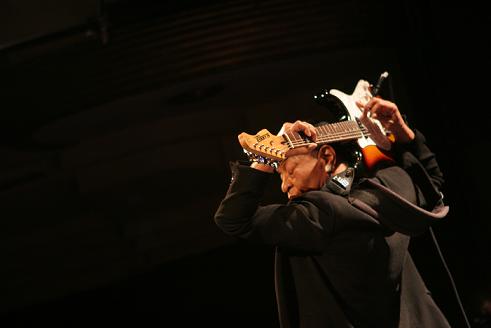 Beverly "Guitar" Watkins © Duffy. Courtesy Music Maker Relief Foundation. One of the things that many music lovers feel passionate about is the blues. As an accomplished guitarist, Tim is also steeped in Southern blues and folk traditions. And, he is intimately familiar with what is known as the Piedmont guitar playing style, the predominant "picking" style this area is known for. While the Mississippi Delta style gets a lot of attention, the contributions of artists playing in the Piedmont style are often overlooked and misunderstood. In Tim's view, labeling the Piedmont as a "tributary" of the Mississippi Delta style, is just "White people tryin' to figure out what the blues is about. I just don't buy into it at all. The blues came from a long time ago and the music from the Piedmont region--North Carolina, South Carolina and Virginia--it's a different style. It's not the hard driving Mississippi style. There's all sorts of styles of blues, from all over the country, that probably came about at the same time--the turn of the last century. So it's easy to say the blues was born in Mississippi. But there's no historic proof that is the case." We don't have just one place to point to on the map. In fact, "more slaves came into Charleston and South Carolina than New Orleans, Louisiana. So it's a big open ended question." 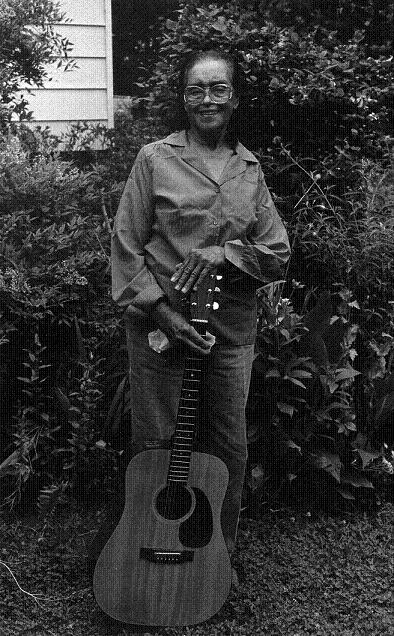 Etta Baker © Duffy. Courtesy Music Maker Relief Morganton, North Carolina, resident Etta Baker (1913-2008), one of the best known Piedmont stylists, is a very good example of an important musical artist who enjoyed the benefits of her Music Maker affiliation. "Tim is just a wonderful, wonderful person," she explained to David Menconi in the Raleigh News and Observer. "I highly, highly appreciate the help he's given me." Etta Baker is perhaps best known for her songs "Railroad Bill," "Carolina Breakdown" and a tune widely popular in the 1960s, "One Dime Blues." Another excellent Piedmont-style player is recent Music Maker find James Arthur "Boo" Hanks. As a young man, Hanks learned songs from his father, who played music after working long days in area tobacco fields. In 2006, Music Maker made the first recordings of his work. Two years later, Music Maker helped buy Hanks a new trailer, one with running water, up-to-date electricity and heating. "Most people, when they hear me play, they think it's two guitars," Boo explains. "I say, 'No, it's just me by myself.' They say, 'I don't believe you. It sounds like two guitars to me!'" At 80 years of age, Hanks had never traveled on an airplane. His first plane trip was for a Music Maker appearance at the New Orleans Heritage and Jazz Festival. 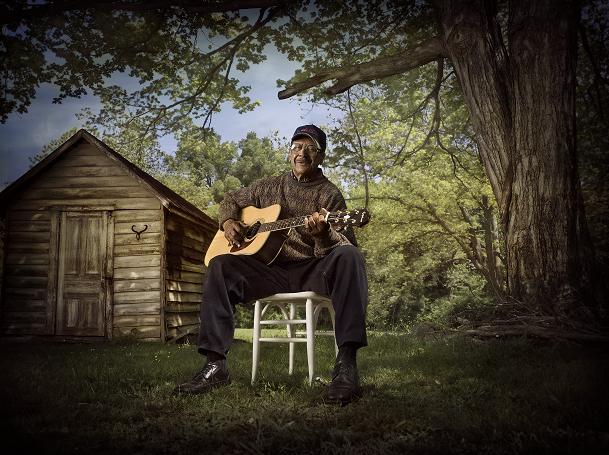 Boo Hanks © Duffy, Courtesy of Music Maker Relief Foundation. "This area of the country is one of the bread baskets, the Holy Lands of traditional Southern music," Tim says. "Compared to other areas of the country, there's a lot of musicians." It has been and continues to be a part of the world where the music and musicians are accessible.  Benton Flippen © Duffy. Courtesy Music Maker In the 1980s, when Tim first visited the area and became better acquainted with its music and musicians, he told The Charlotte Observer: 'Shoot, I was in hog heaven.'" "I still am," he says. "I just found a slew of new guys I need to go out and record." In for the long haul, Denise says she and Tim can't easily look five or ten years into the future and figure out how things will be then. "We're all watching the news, watching how things are gonna look 5, 10 days down the line," she explained in October of 2008, during the onset of the world's lingering financial crisis. "A recession's gonna have a tremendous impact on our organization. First off, when you have inflation in basic life essentials, no one feels that more than the poor, because a greater percentage of their income is spent on those necessities." In their book, Music Makers, the reality confronting their musical artists is expressed another way: "What seems to make the difference is not the amount of monetary assistance received, but that someone cares and is interested in their musical expression." Being heard and appreciated is something almost all musicians thrive on. For many struggling artists, it's not about fame or the next big seller. It's about being seen and heard, knowing someone is there--listening. In promoting rediscovery, Music Maker celebrates our cultural heritage. By bringing their artists to new audiences, the music is heard and given the chance to inform and influence our world. Visit Music Maker Relief Foundation at www.musicmaker.org. © James P. Goss, 2009. All rights reserved. Website by FCE Web Design. |